Showing posts with label Chelonia mydas. Show all posts

Friday, June 6, 2014

Saturday, May 10, 2014

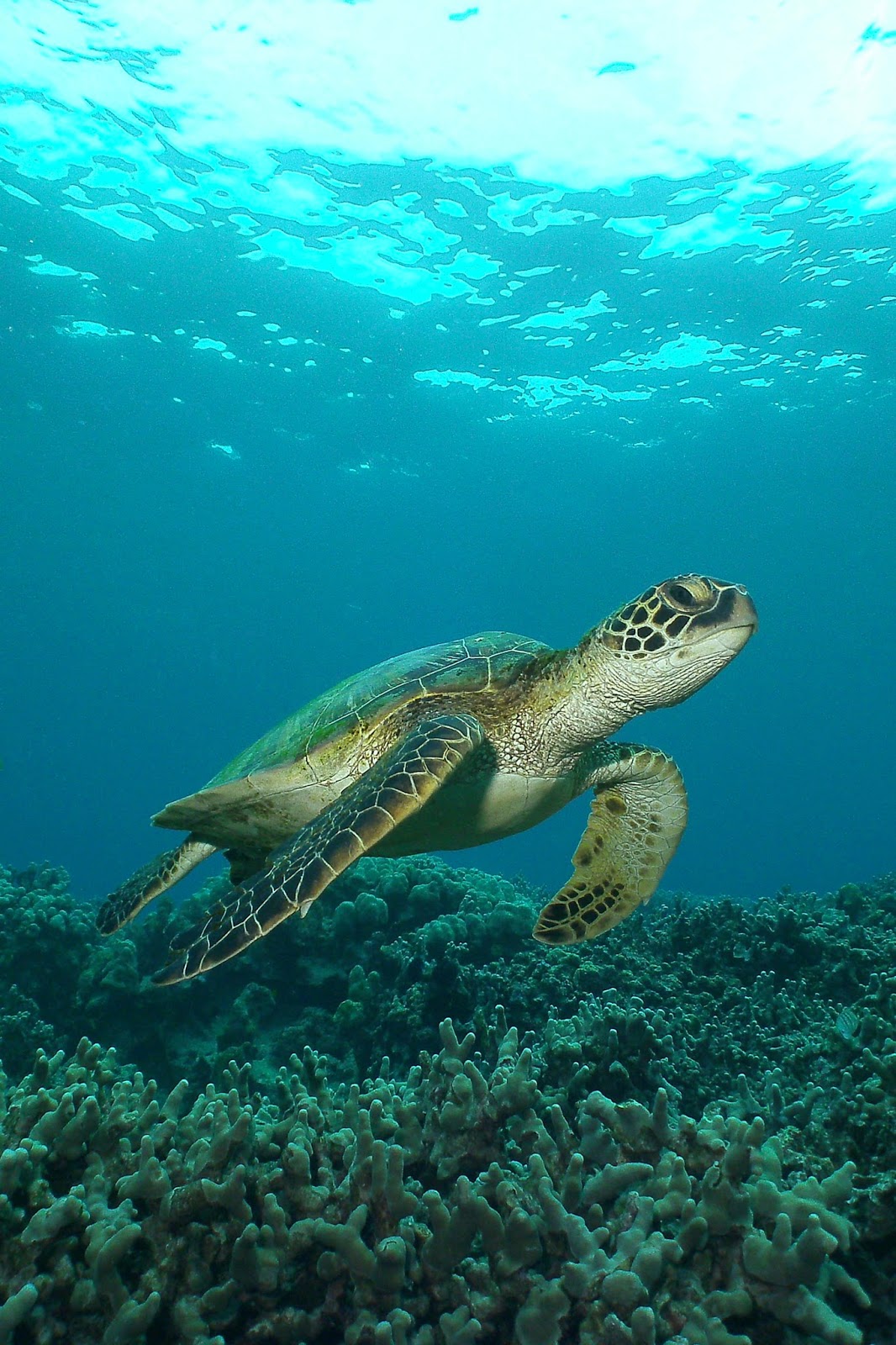
Big Blue World

Photo Copyright 2014 by Barry Fackler


green sea turtle                                             Chelonia mydas

Saturday, May 3, 2014

Friday, April 4, 2014

Hitchers

Photo Copyright 2014 by Barry Fackler


A few years ago, I encountered a large male green sea turtle (Chelonia mydas) swimming through Honaunau Bay with white masses on his shell. Initially, I thought these might have been fibropapillomas that sometimes afflict sea turtles. Upon closer inspection, I saw that the masses were gooseneck barnacles (Pollicipes polymers) a type of sessile crustacean that can often be seen attached to pilings, docks and boat hulls.


Photo Copyright 2014 by Barry Fackler


George Balazs, NOAA's sea turtle biologist in Hawai'i, explained that barnacles tend to grow on green sea turtles that remain out in the open sea for prolonged periods of time. Most greens spend their time near shore except when traveling to and from their mating grounds.


Photo Copyright 2014 by Barry Fackler


After the turtle came to rest, I found another creature hitching a ride - this slender remora (Echineis naucrates).

Over the years I've seen a lot of turtles but this was the first I've ever seen with barnacles and  one of only a handful I've seen with a remora. I guess this turtle continued his seafaring ways because I never saw him again.

Thursday, March 13, 2014

Wednesday, March 12, 2014

Big Sky

Photo Copyright 2014 by Barry Fackler
green sea turtle               Chelonia mydas

Thursday, March 6, 2014

Uprising

Photo Copyright 2014 by Barry Fackler


green sea turtle          (Chelonia mydas)

Thursday, February 20, 2014

Friday, February 14, 2014

Monday, February 3, 2014

Bunkmates

Photo Copyright 2014 by Barry Fackler

This photo shows a green sea turtle (Chelonia mydas) sharing its resting spot with a whitetip reef shark (Triaenodon obesus). As mismatched as this arrangement may seem, I've actually seen it several times and I imagine it must be fairly common. Both species like to shelter under ledges or in lava tubes during the day and, since such places are in short supply, inter-species co-habitation sometimes occurs. This type of shark has small teeth and feeds on small reef fishes and invertebrates so the turtle is not in peril.

These species like to shelter in tight spaces so getting a pleasing photo of both creatures is difficult. Hence, the shark's face being obscured. 

Wednesday, February 20, 2013

Turtle Bedtime

Photo Copyright 2013 by Barry Fackler
This green sea turtle (Chelonia mydas) is entering an underwater cave for a nap. When sleeping or resting, a green sea turtle can stay submerged for several hours on a single breath. However, when active or stressed, time submerged is greatly reduced. Greens can reach up to five feet in length and weigh up to 700 pounds. So now you know!